
The End of Work (as we know it) at McDonald’s
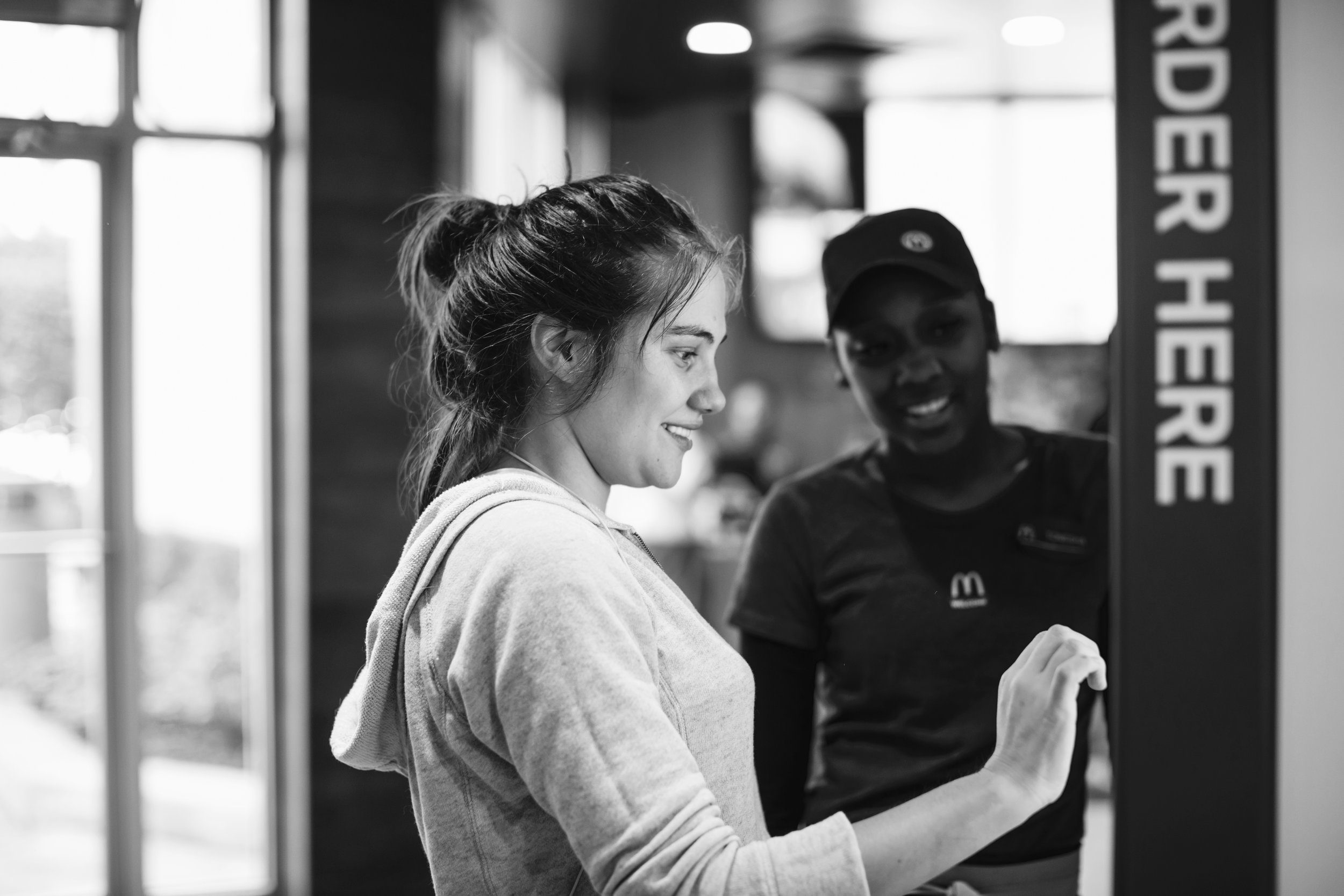
Image source: McDonalds. Customer trying out self serve kiosk at McDonalds
Since 2018 McDonalds in South Africa has been undergoing a shift from humans to machines serving customers. This is just a beginning of a process that might just lead to a McD with very limited human beings and more machines. Here’s what the McD CEO had to say to shareholders in 2018 to explain this shift:
"Customers at thousands of our restaurants are appreciating a more enjoyable, personalised and seamless experience. We’ll continue introducing these improvements to thousands more restaurants as we scale the Experience of the Future platform, with enhancements such as digital menu boards, self-order kiosks, greater hospitality and a modernised look"
The self-serve kiosks have been tested in hundreds of U.S. McDonalds over the last few years and are already widely in place in Europe and other parts of the world.
Many will argue that this shift means the end of work for some workers at McD and this view is correct. What has not been said enough yet is that this also means more (free) work for consumers. Here’s what’s really happening at corporations that are automating work. The consumer now has to do everything with limited or no service from a human being. The consumer has to be the cashier as well and suffer the consequence when the machine does not deliver.
This is great for the capitalists. It means less costs as there’s less people to pay and less people to protest. The machine just needs maintenance and no salary and it rarely complains about working ridiculous hours. The strange aspect of this shift at McD is that the consumers still pay the same or more even though the customers do the work for free. The automation at establishments such as McDonalds whilst it leads to loss of jobs, it creates an opportunity for businesses that offer personal services to customers.
As businesses are automating, using machines and robots, some customers will demand more human interaction. Automation will be ideal for industries that require less interaction with humans but not so for businesses such as McD. In the long run, businesses that will offer personalised care will thrive and they will be able to charge premium for their services.
What now for displaced workers?
What about workers who will be replaced by the automation process? This is the question that should occupy the minds of policy makers in South Africa. McDonalds is just one restaurant that has begun with the automation process, however, it won’t be the last.
As more businesses in the services sector automate there’s a need for an urgent intervention to save jobs. For McDonald’s employees the impact of the 4th Industrial Revolution will not be felt in the next 10 years but sooner.
The intervention to assist workers who may be displaced by automation ought to start now. At the very least, it may be necessary to reskill such workers for new work. It may also be necessary to create more awareness about people who are already loosing work due to automation and match them to companies that need their skills.
Someone once said the unemployment of young people in South Africa is the ticking time bomb. Now there’s a second ticking time bomb and it’s the displacement of workers by automation.