
THE INFONOMIST
Inside the Evolution of Photography
The history of photography is not merely a chronicle of optics and sensors; it is a sweeping narrative of what happens when the stubborn barriers of human exclusivity collide with the relentless, democratic pulse of innovation.
The Era of the Alchemist
In the beginning, photography was an elitist discipline. It was a craft that demanded the soul of an artist and the precision of a chemist. The early pioneers—thinkers like Louis Daguerre and William Henry Fox Talbot—operated at the intersection of volatile chemistry and crude physics. Their work with metal plates and glass negatives required a solemn, calculated patience. In those days, a photograph was a scarce asset, a finite expenditure of time and hazardous effort. The camera was a gatekeeper, and access was granted only to those who possessed the deep technical expertise to tame the light.
The Kodak Disruption
The first seismic shift arrived when the complexity was abstracted away. It was a classic example of innovation meeting the masses. When George Eastman and Kodak introduced the revolutionary mantra, "You press the button, we do the rest," they fundamentally decoupled creative intent from technical labour. Photography was pulled from the cold, professional sanctuary of the studio and deposited into the warm, messy reality of family life. Yet, for all its revolutionary flair, it was still tethered by the physical constraints of film rolls and the wait for development.
The Digital Democratization
The second great transformation was ignited by the silicon chip. With the arrival of digital sensors and, ultimately, the smartphone, the camera was liberated from the tyranny of the darkroom. Storage became effectively infinite, and costs plummeted. Suddenly, the device in our pocket wasn't just a camera; it was a conduit. The lens turned inward, fueling the selfie culture and turning every individual into both the photographer and the subject. The line between the creator and the audience—once a bright, formidable wall—began to dissolve.
The AI Paradigm Shift
We are now standing at the threshold of a third, perhaps more profound, transition. Artificial intelligence is doing what the digital revolution started: it is changing the very ontological status of the image. For generations, the photograph held value because of its indexical relationship to reality—it proved that something had been there. AI is challenging that assumption. It is allowing us to reconstruct, expand, and generate imagery that transcends the original frame.
This is not simply a leap in processing power; it is a leap in functionality. Look at a device like the Samsung Galaxy A37 5G. It represents a paradigm shift where the camera ceases to be a passive recording instrument and becomes an intelligent, collaborative system. It is computational photography at its zenith. The hardware is now backed by a "digital assistant" that identifies scenes, optimizes light, and sharpens details in real-time, effectively performing the work that once required an entire team of photographers, videographers, and editors.
Agency at the Edge
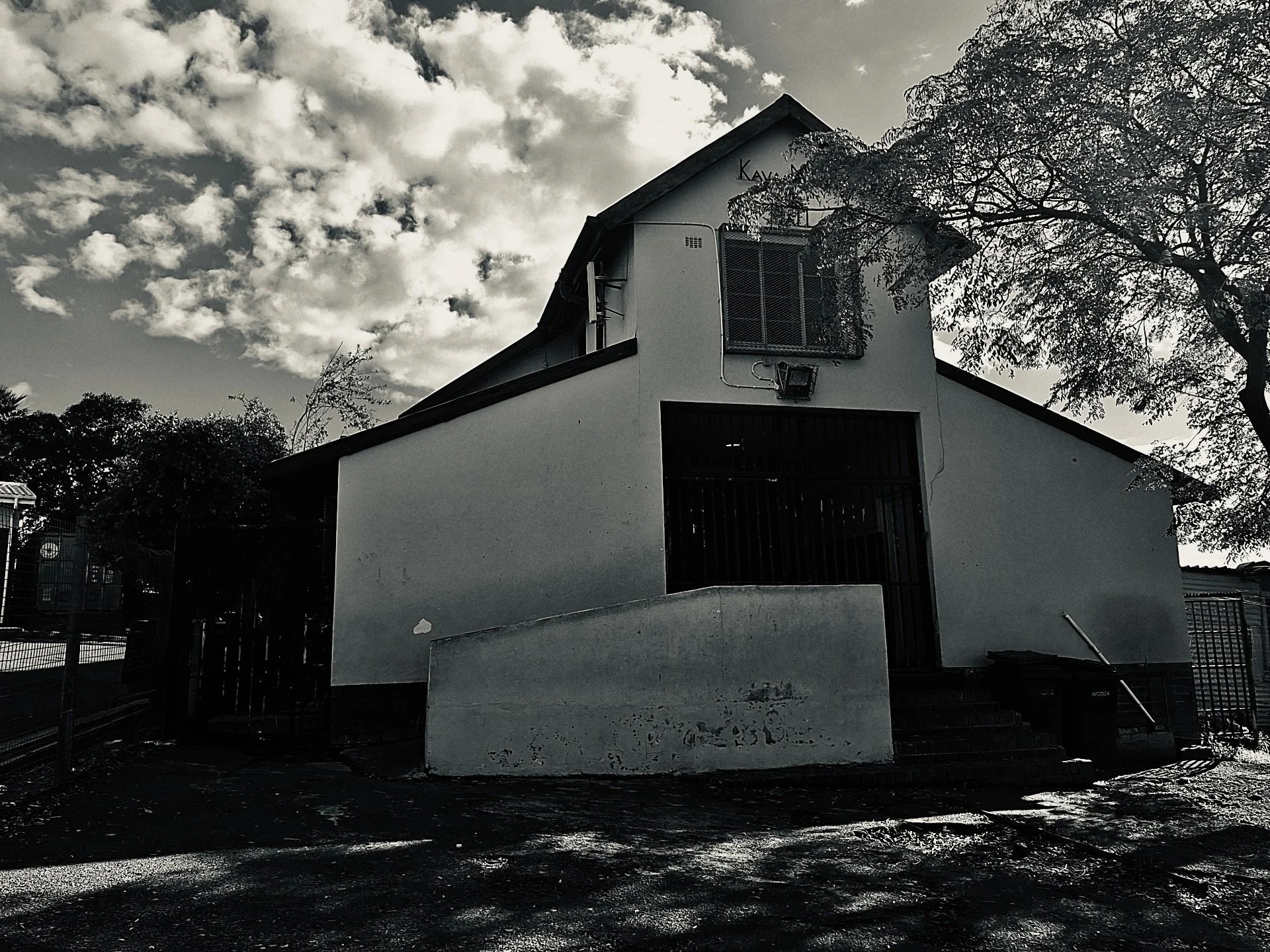
The true genius of this technology is best understood when you move away from the corporate labs and into the field. Consider the Kayamandi Photo Project. I had the honour of guiding the youth in Kayamandi, Stellenbosch to make effective use of the device and its powerful photography tool. Here, youth in a South African township are using the A37 5G not just to capture the past, but to architect the future. They are taking images of crumbling infrastructure and using AI-driven tools to visualize, design, and lobby for a new, revamped reality. They have effectively compressed the capabilities of an entire creative production house into a single smartphone. This is the ultimate promise of innovation. When we strip away the friction of creation, we empower the individual to become an agent of change.
The arc of photography’s history has been one of expanding circles of participation. It started as the province of the specialist. It grew to encompass the consumer. Now, it belongs to the individual empowered by artificial intelligence to make a tangible, social difference. It confirms a truth I have observed throughout the history of technological innovation: the most revolutionary tools are not the ones that replace us, but the ones that disappear, quietly augmenting our human capabilities and giving us the power to reimagine the world we inhabit.
This is not simply a leap in processing power; it is a leap in functionality. Look at a device like the Samsung Galaxy A37 5G. It represents a paradigm shift where the camera ceases to be a passive recording instrument and becomes an intelligent, collaborative system. It is computational photography at its zenith. The hardware is now backed by a "digital assistant" that identifies scenes, optimizes light, and sharpens details in real-time, effectively performing the work that once required an entire team of photographers, videographers, and editors.
Agency at the Edge
The true genius of this technology is best understood when you move away from the corporate labs and into the field. Consider the Kayamandi Photo Project. I had the honour of guiding the youth in Kayamandi, Stellenbosch to make effective use of the device and its powerful photography tool. Here, youth in a South African township are using the A37 5G not just to capture the past, but to architect the future. They are taking images of crumbling infrastructure and using AI-driven tools to visualize, design, and lobby for a new, revamped reality. They have effectively compressed the capabilities of an entire creative production house into a single smartphone. This is the ultimate promise of innovation. When we strip away the friction of creation, we empower the individual to become an agent of change.
Photograph captured with Samsung A37 5G.
The arc of photography’s history has been one of expanding circles of participation. It started as the province of the specialist. It grew to encompass the consumer. Now, it belongs to the individual empowered by artificial intelligence to make a tangible, social difference. It confirms a truth I have observed throughout the history of technological innovation: the most revolutionary tools are not the ones that replace us, but the ones that disappear, quietly augmenting our human capabilities and giving us the power to reimagine the world we inhabit.

Make it stand out
Developed with GeminiAI on Samsung A37 5G
Instagram: @SamsungMobileSA, TikTok: @SamsungSouthAfrica, YouTube: @SamsungSouthAfricaChannel
X: @SamsungMobileSA