
THE INFONOMIST

Inside the Evolution of Photography
The history of photography is not merely a chronicle of optics and sensors; it is a sweeping narrative of what happens when the stubborn barriers of human exclusivity collide with the relentless, democratic pulse of innovation.
The Era of the Alchemist
In the beginning, photography was an elitist discipline. It was a craft that demanded the soul of an artist and the precision of a chemist. The early pioneers—thinkers like Louis Daguerre and William Henry Fox Talbot—operated at the intersection of volatile chemistry and crude physics. Their work with metal plates and glass negatives required a solemn, calculated patience. In those days, a photograph was a scarce asset, a finite expenditure of time and hazardous effort. The camera was a gatekeeper, and access was granted only to those who possessed the deep technical expertise to tame the light.
The Kodak Disruption
The first seismic shift arrived when the complexity was abstracted away. It was a classic example of innovation meeting the masses. When George Eastman and Kodak introduced the revolutionary mantra, "You press the button, we do the rest," they fundamentally decoupled creative intent from technical labour. Photography was pulled from the cold, professional sanctuary of the studio and deposited into the warm, messy reality of family life. Yet, for all its revolutionary flair, it was still tethered by the physical constraints of film rolls and the wait for development.
The Digital Democratization
The second great transformation was ignited by the silicon chip. With the arrival of digital sensors and, ultimately, the smartphone, the camera was liberated from the tyranny of the darkroom. Storage became effectively infinite, and costs plummeted. Suddenly, the device in our pocket wasn't just a camera; it was a conduit. The lens turned inward, fueling the selfie culture and turning every individual into both the photographer and the subject. The line between the creator and the audience—once a bright, formidable wall—began to dissolve.
The AI Paradigm Shift
We are now standing at the threshold of a third, perhaps more profound, transition. Artificial intelligence is doing what the digital revolution started: it is changing the very ontological status of the image. For generations, the photograph held value because of its indexical relationship to reality—it proved that something had been there. AI is challenging that assumption. It is allowing us to reconstruct, expand, and generate imagery that transcends the original frame.
This is not simply a leap in processing power; it is a leap in functionality. Look at a device like the Samsung Galaxy A37 5G. It represents a paradigm shift where the camera ceases to be a passive recording instrument and becomes an intelligent, collaborative system. It is computational photography at its zenith. The hardware is now backed by a "digital assistant" that identifies scenes, optimizes light, and sharpens details in real-time, effectively performing the work that once required an entire team of photographers, videographers, and editors.
Agency at the Edge
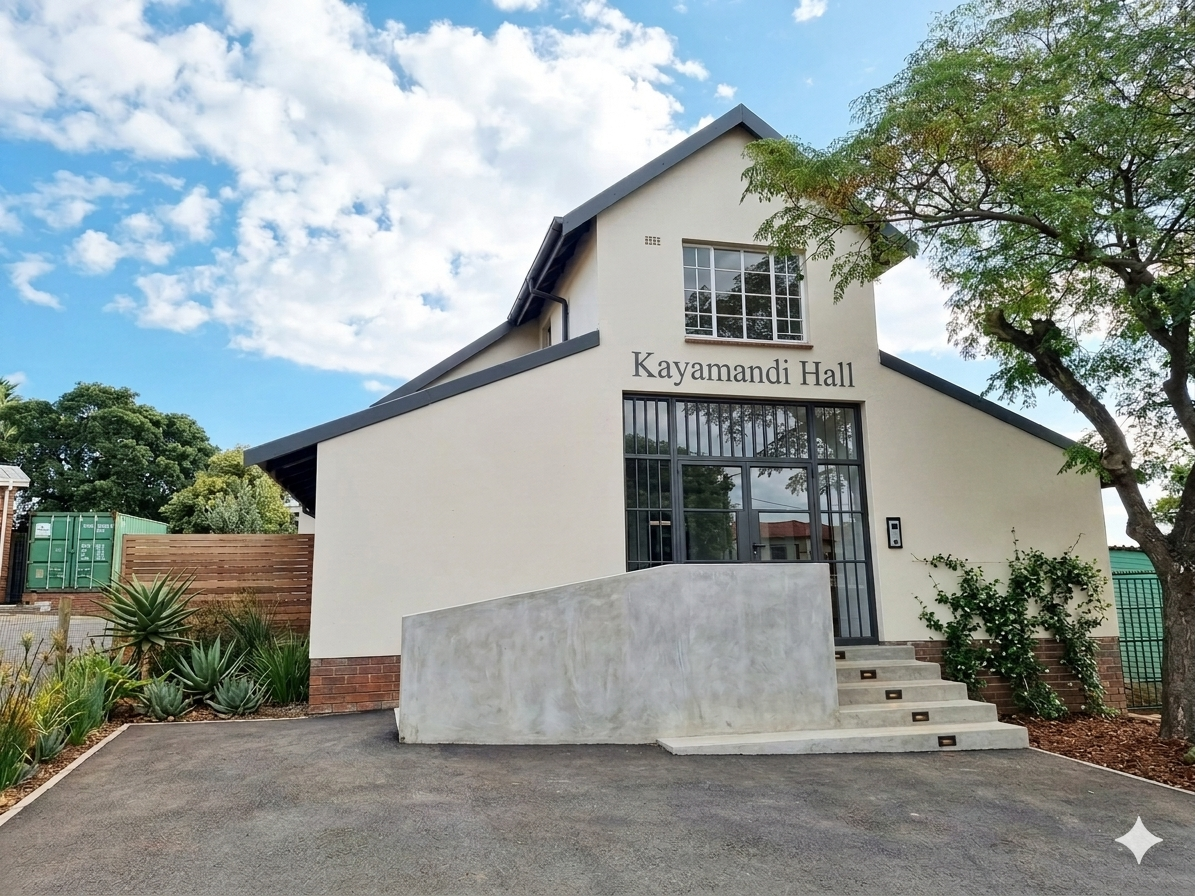
The true genius of this technology is best understood when you move away from the corporate labs and into the field. Consider the Kayamandi Photo Project. I had the honour of guiding the youth in Kayamandi, Stellenbosch to make effective use of the device and its powerful photography tool. Here, youth in a South African township are using the A37 5G not just to capture the past, but to architect the future. They are taking images of crumbling infrastructure and using AI-driven tools to visualize, design, and lobby for a new, revamped reality. They have effectively compressed the capabilities of an entire creative production house into a single smartphone. This is the ultimate promise of innovation. When we strip away the friction of creation, we empower the individual to become an agent of change.
The arc of photography’s history has been one of expanding circles of participation. It started as the province of the specialist. It grew to encompass the consumer. Now, it belongs to the individual empowered by artificial intelligence to make a tangible, social difference. It confirms a truth I have observed throughout the history of technological innovation: the most revolutionary tools are not the ones that replace us, but the ones that disappear, quietly augmenting our human capabilities and giving us the power to reimagine the world we inhabit.
This is not simply a leap in processing power; it is a leap in functionality. Look at a device like the Samsung Galaxy A37 5G. It represents a paradigm shift where the camera ceases to be a passive recording instrument and becomes an intelligent, collaborative system. It is computational photography at its zenith. The hardware is now backed by a "digital assistant" that identifies scenes, optimizes light, and sharpens details in real-time, effectively performing the work that once required an entire team of photographers, videographers, and editors.
Agency at the Edge
The true genius of this technology is best understood when you move away from the corporate labs and into the field. Consider the Kayamandi Photo Project. I had the honour of guiding the youth in Kayamandi, Stellenbosch to make effective use of the device and its powerful photography tool. Here, youth in a South African township are using the A37 5G not just to capture the past, but to architect the future. They are taking images of crumbling infrastructure and using AI-driven tools to visualize, design, and lobby for a new, revamped reality. They have effectively compressed the capabilities of an entire creative production house into a single smartphone. This is the ultimate promise of innovation. When we strip away the friction of creation, we empower the individual to become an agent of change.
Photograph captured with Samsung A37 5G.
The arc of photography’s history has been one of expanding circles of participation. It started as the province of the specialist. It grew to encompass the consumer. Now, it belongs to the individual empowered by artificial intelligence to make a tangible, social difference. It confirms a truth I have observed throughout the history of technological innovation: the most revolutionary tools are not the ones that replace us, but the ones that disappear, quietly augmenting our human capabilities and giving us the power to reimagine the world we inhabit.
Make it stand out
Developed with GeminiAI on Samsung A37 5G
Instagram: @SamsungMobileSA, TikTok: @SamsungSouthAfrica, YouTube: @SamsungSouthAfricaChannel
X: @SamsungMobileSA
WIKIPEDIA ban in Russia is coming

Wikipedia will soon disappear in Russia according to recent media reports. The Guardian reported that President Vladimir Putin considers Wikipedia an unreliable source of information. He also indicated that instead of Wikipedia, Russia will build its own online encyclopedia with according to the Russian government is more reliable and constantly updated on the basis of scientifically verified sources of knowledge.
As part of this process, Russia will transform its print encyclopedia into an online version similar to Wikipedia.It’s reported that Russian authorities have set aside a budget of about $31 million to implement the project. A National research and education will also be setup to support content development for the encyclopedia.
This move by Russia is seen as part of country’s efforts towards creating its own independent internet and information highway.Earlier this year Russia passed a law that would allow the country to create its own independent internet. Russia views this process as part of its defence strategy against cyber security.
What this means for the world is that splinternet is taking shape. Splinternet is about splitting the internet into different national or regional mini-internets. It was always seen as something that might happen in the future. The move by Russia aswell as the trade war between the US and China are fuelling the splinternet.
This will mean the end of the web as we know. The ease of creating a product and deploy it across the world will come to end. Navigating the web will keep people within their internet national boundaries. To access internet spaces in other countries will require permissions from governments.
As this process unfolds, the digital wil change forever as businesses that were built for the global internet will have to recreate themselves for the splintered internet. For now its Wikipedia, other international tech giants may follow. The question is, which one?
Meet the new INTERNET BOSS, from South Africa

United Nations Secretary-General António Guterres has appointed Ms. Anriette Esterhuysen of the Republic of South Africa as the new Chair of the Internet Governance Forum’s (IGF) Multistakeholder Advisory Group.
Ms. Esterhuysen currently serves as a Commissioner on the Global Commission on the Stability of Cyberspace. She was the executive director of the Association for Progressive Communications (APC) - the largest ICT-focused civil society network in the world - from 2000 to 2016. She continues to work with APC as a consultant and convenes the African School on Internet Governance (AfriSIG) a joint initiative of APC, the African Union Commission and Research ICT Africa. Ms. Esterhuysen has served on the African Technical Advisory Committee of the United Nations Economic Commission for Africa's African Information Society Initiative (1996-1999), the United Nations ICT Task Force (2002-2005), the World Summit on the Information Society (WSIS) Working Group on Financing Mechanisms (2003-2005), the Commission on Science and Technology for Development Working Group on Internet Governance Forum (IGF) Improvements (2011-2012) and on Enhanced Cooperation (2017-2018), the Global Commission on Internet Governance and the Multistakeholder Advisory Group (MAG) of the IGF (2012-2014). She was inducted into the Internet Hall of Fame as a Global Connecter in 2013.
Esterhuysens appointment comes at a time when the world is need of a stronger international body to govern the internet according to the UN Secretary General,António Guterres.
In a recent interview with an international technology magazine, Wired, he mentioned that society has serious technological challenges which requires the Internet Governance Forum, he said “It is an institution that can do more, in my opinion, can be enhanced, can be strengthened.
Esterhuysen has the task of leading the global body which has the responsibility to bring various people and stakeholder groups to the table as equals to exchange information and share good policies and practices relating to the Internet and technologies. While the IGF may not have decision-making mandates, it informs and inspires those who do. It facilitates common understandings and knowledge exchange of how to maximize Internet opportunities and address risks and challenges.
Speaking about the value of this UN body, Guterres said during the interview “I think first we need to bring people together. That's why we appointed a high-level panel on digital cooperation. And there are a number of recommendations that were made. For each recommendation, we are now creating a group of championsgovernments, companies and other entities to try to push for digital cooperation, which means in each area, and these are complex issues, we need to bring together actors. And we can be the platform where they come together”
Esterhuysen will lead a group of global entities with the responsibility to ensure tha the internet adheres to international norms and standards.
Twitter boss (Jack Dorsey) is in Africa
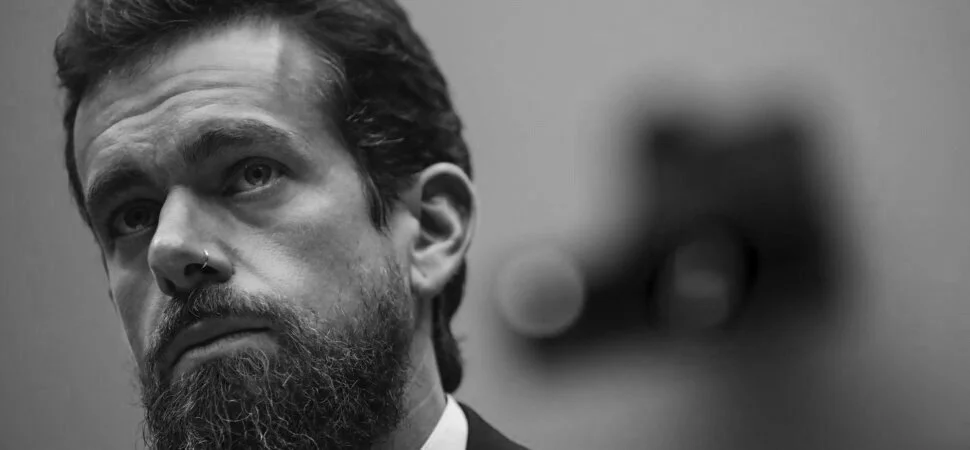
Jack Dorsey
Jack Dorsey, the Twitter boss is in Africa. He is currently in Nigeria according to his latest tweet. Dorsey is scheduled to visit a number of countries in the African continent including South Africa. During his visit, it is believed that he will be meeting with local entrepreneurs. This is the first Africa visit by the leader of one of the most important social network platforms in the world. It is believed that his visit may be related to his other business venture, Square. The fin-tech company,Square, provides payments hardware and software to small businesses however currently it has no operations in Africa. Scheduled meetings with local entrepreneurs may be a step towards introducing Square in the African continent.
Square fundamentally disrupted the card processing industry thanks to its now-ubiquitous card readers, allowing independent merchants to take cashless payments with a minimum of fuss. Square’s Cash App, which directly competes with PayPal Holdings Inc’s Venmo app, and allows users to send money to each other for free. The app charges fees to businesses when users choose to instantly deposit money from the app into their bank accounts, rather than wait several days. Square has been attracting larger merchants through its newer products such as its lending services unit, Square Capital, and CashApp.
The fin-tech company recently reported to shareholders that it’s bringing more products to markets outside the U.S. This quarter Square launched Square Terminal in Australia, Canada, and the United Kingdom. It indicated that there is strong product-market fit for Square Terminal in these regions because it provides a portable, all-in-one payments solution for dip and tap payments (which, unlike in the U.S., have been prevalent for years). In the third quarter, sales of Square Terminal outside the U.S. represented more than one-third of sales even though these are much smaller markets. Dorsey has recently visited all these other countries where Square has presence as part of his global tour. His visit to Africa may be part of this tour.
What happens to Personal Data?

Over the past few years, The Infonomist column on Business Report has highlighted risks, opportunities associated with data and information. Throughout this period we’ve seen data leaks, data breaches, reports that highlight data abuses. At the same time, we’ve also seen data tech startup companies becoming billion-dollar companies illustrating the economic power of data.
In South Africa, people are noticing efforts to collect data in commercial areas, public areas and residential areas. Street corners are being fitted with cameras, shopping centres are filled with cameras.
In Europe, concerns have been raised about the abuse of personal data by corporations. This has led to the development of a legal instrument to curb the damage. In the US, legislators are hauling technology corporations to the Senate to account for their data misdeeds.
These concerns have also been raised by the US Presidential candidate, Andrew Yang, who has called for data to be a property right. In his policy proposal he suggests that people need to have a right to be informed as to what data will be collected, and how it will be used, the right to opt-out of data collection or sharing, the right to be told if a website has data on you, and what that data is, the right to be forgotten; to have all data related to you deleted upon request, the right to be informed if ownership of your data changes hands, the right to be informed of any data breaches including your information in a timely manner.
These are sound proposals that should form part of global data standards. In other parts of the world, lawmakers are taking steps to ensure that some of these standards are part of national policies. The GDPR is a case in point in Europe. What is concerning, however, is that in the African continent there’s little debate about issues related to data. These issues are not part of everyday conversations and yet they have the potential to significantly impact peoples lives. The amount of data being collected locally and stored in other parts of the world is staggering. This is due to the fact that most technology products and services we use are located in other parts of the world. This is scary when one considers that the future of control will be made possible by data.
This highlights the need to begin a serious conversation about what is being done about African data. There’s a need for transparency by governments, corporations about the data that is collected. People need to know what happens to the data collected by cameras, how much money is generated by corporations who collect peoples data and with whom is the data shared.
This conversation should end with a consensus that acknowledges that the people from whom the data is collected own such data. Currently, the power balance is skewed towards corporations and governments. Technology companies that make a collection of such data should form part of this conversation.
To facilitate these conversations in South Africa, a platform for conversations, known as The Infonomist Forum, about the impact of technology on society will be established. It will bring together users and creators of technology with the aim of creating transparency about the use of data. In the form of live events, it will also serve as a platform for a conversation about standards that should be put in place to ensure that the rights of users are not abused.
SA Tech Startups not great enough for Jack Ma's Top Ten African startups
South African tech startups do not feature on the final top 10 startups sought after by Jack Ma and his foundation. The finalists were chosen from nearly 10,000 applicants from 50 African countries.The Africa Netpreneur Prize Initiative is Jack Ma’s flagship entrepreneur program in Africa led by the Jack Ma Foundation. This week the Africa Netpreneur Prize Initiative released details of the top 10 which included startups from countries across the continent. Tech startups from Nigeria dominate the chosen top ten followed by startups from Rwanda and Egypt. The following are the final top ten startups that includes e-commerce, agritech, fintech and health tech startups.
Mumm,
Thrive Agric
Life Bank
J-Palm
UZURI K&Y
Water Access Rwanda
WeMUNIZE
DrugStoc
Nawah-Scientific
Afrikrea.com
Mumm is a virtual cafeteria for businesses, harnessing the power of shared economy through technology, cloud kitchens and an online marketplace for home-based entrepreneurial cooks. Mumm is led by Waleed Abd El Rahman, who is a seasoned entrepreneur with 12+ years in food tech. He is also the former founding managing director of MIT Technology Review-Middle East and a member of the Advisory Committee of the World Economic Forum’s Global Shapers Community.
Thrive Agric is an agricultural technology-enabled company that works with smallholder farmers to enable them with greater access to finance, as well as improve their income and harvest distribution. Today, Thrive Agric works with 22,000 farmers in Nigeria, but the company is aiming to build the largest network of farmers in Africa. They team behind the company is on a mission to “build an Africa that feeds the world and Itself.” Thrive is led by Ayodeji Arikawe who is an accomplished software engineer and serves as both co-founder and CTO for Thrive Agric.
LifeBank is a medical distribution company that uses data and technology to help health workers discover critical medical products. The company has saved over 5,300 lives in Nigeria. Founder Temie Giwa-Tubosun has over 10 years of health-management experience with Department for International Development, the World Health Organization, the United Nations Development Programme and Lagos State. In 2014, BBC listed her as one of the 100 women changing the world. She was also recognized by Quartz and the World Economic Forum.
J-Palm Liberia (JPL) was founded with the goal of making premium consumer goods while creating income-earning and employment opportunities through sustainable palm-oil production. When JPL was first founded, palm oil kernels had been going to waste in Liberia, but founder and CEO Mahmud Johnson found a way to innovate productive uses for this overlooked natural resource. Today, JPL has created a range of beauty and clean-energy products, built a robust network of partnerships across the country, and helped to create jobs for hundreds of Liberians. Mahmud holds a degree in economics from Dartmouth College and is a 2017 recipient of the Order of the Star of Africa conferred by the President of Liberia.
UZURI K&Y is an African-inspired eco-friendly shoe brand established in Rwanda and co-founded by Kevine Kagirimpundu. She is passionate about ending global waste while also leveraging her creativity to create employment opportunities for her community. UZURI has made a direct impact on more than 750 people through employment and skills training. In addition to obtaining her degree in creative design, she has participated in numerous entrepreneurship programs to enhance her skills in business development. In 2017, she was recognized as the winner of the Made in Rwanda Enterprise of the Year.
Water Access Rwanda pioneered INUMATM, a Safe Water Microgrid that reclaims broken boreholes and transforms them into state-of-the-art solar-powered water kiosks and pipelines. The water is sold for $1/1000 litre and creates off-farm jobs for youth. Currently, Water Access Rwanda employs 68 people, and allows 47,612 customers to access water daily across 86 stations. Christelle Kwizera who is the founder is a mechanical engineer and was named INCO’s woman entrepreneur of the year in 2019, among other high-profile awards.
WeMUNIZE by Black Swan Tech Ltd is helping to solve Nigeria’s public-health challenges by deploying an automated scheduling, GPS-enabled software-as-a-service that uses a combination of digital record keeping and community engagement to increase birth registration and early childhood immunizations. Black Swan is working with USAID Nigeria to expand WeMUNIZE coverage in northern Nigeria. The company was founded by Dr. Tosan J. Mogbeyiteren who is a public-health specialist with more than 13 years of experience in deploying technology to solve development challenges in Nigeria.
DrugStoc is a cloud-based pharmaceutical IT and logistics platform focused on eliminating counterfeit drugs, expanding access to pharmaceutical products and improving transparency in pricing for healthcare providers and the product supply chain. The company is led by Chibuzo Opara, who is a health economist and medical doctor with over 12 years of experience in the health sector. He has worked with the World Health Organization, the World Bank, and the International Finance Corporation.
Nawah-Scientific is the first private research center in the MENA region focused on natural and biomedical sciences that offers analytical and scientific services online and on-demand. Dr. Sakr has 13 years of pharmaceutical experience, has worked as an adjunct assistant professor of entrepreneurship at Zewail City of Science and Technology, and holds scientific and business awards for innovative product design.
Afrikrea.com is the leading “Made of Africa” fashion, art and handicraft online marketplace. The marketplace has processed more than $4 million in sales across 101 countries and supports merchants from all over the world. After growing up in Mali and working for companies like PricewaterhouseCoopers and Alstom, Moulaye now dedicates his time to building the global infrastructure for African culture.
The initiave only picked 2 SA companies for their Top 20 of the 50 chosen startups. Africa Netpreneur Prize Initiative had an objective to identify top entrepreneurs from across the continent, not only to reward them but to inspire a whole new generation of potential game changers for Africa. The initiative will host the “Africa’s Business Heroes” finale event in Ghana, Accra on the 29th November where winners will receive a share of the $1 million USD grant prize pool.
HUAWEI Sells more phones despite the ban
Huawei Technologies has released impressive third-quarter results which saw results rise by 24.4% during the first nine months of the year despite its challenges with the US government.
During this period the Chinese technology giant shipped 185 million smartphones which is a 26% increase from the previous year. Future results in 2020 may reveal a clearer picture of the impact of trade restrictions as current results were unaudited.
Chinese tech giants ability to still ship so many phones in 2019 suggests its lead in the Chinese market is keeping its sales afloat even though there’s less demand abroad. According to IDC the global market intelligence firm, China shipped 206 million smartphones in 2018. The company also saw rapid growth in other new businesses like PCs, tablets, wearables, and smart audio products.
Huawei also reported revenue of $86.1 billion during the past 9 months period. In the carrier business, commercial deployment of 5G networks around the world has sped up. Huawei has continued to launch innovative solutions with leading carriers like 5G Super Uplink, smart & simplified transport networks. The company has also worked with industry partners to establish an industry alliance and an industry innovation base for 5G deterministic networking to enable the innovation and growth of carriers.
To date, Huawei has signed more than 60 commercial contracts for 5G with leading global carriers and shipped more than 400,000 5G Massive MIMO active antenna units (AAUs) to global markets. The production and supply of Huawei's optical transmission, data communications, and IT products grew steadily.
The Chinese larget tech company has said it has maintained its focus on ICT infrastructure and smart devices and continued to boost the efficiency and quality of its operations. The tech giant said that this has contributed to increased operational and organizational stability and solidified the company's performance in the first three quarters of 2019.
The 5G business is also showing positive signs. Huawei said on Wednesday it has signed more than 60 5G commercial contracts to date worldwide. Huawei has continued to launch innovative solutions with leading carriers like 5G Super Uplink, smart & simplified transport networks. The company has also worked with industry partners to establish an industry alliance and an industry innovation base for 5G deterministic networking to enable the innovation and growth of carriers.
Earlier this week Germany has indicated that it won’t ban any operator, which signalled that the country is not bowing to US pressure to shut out Chinese tech giant Huawei from its 5G networks.
LIBRA FORGES AHEAD: Forms Board and appoints Leadership
Twenty one members of the Libra association met for the first time on Monday this week. Libra is a global cryptocurrency that is currently under development by Facebook as well as partners and scheduled to be launched in 2020. As part of this meeting, by the association overseeing the Libra formation, they formally signed onto the Libra Association charter, formalized the Libra Association council, elected the Board of Directors, and appointed members of the Libra Association executive team.
The Libra Council appointed a board of directors that includes the following individuals: Matthew Davie (Kiva Microfunds); Patrick Ellis (PayU); Katie Haun (Andreessen Horowitz); David Marcus (Calibra, Inc.); and Wences Casares (Xapo Holdings Limited). The Libra board also officially appointed the initial association staff: Bertrand Perez, Chief Operating Officer and Interim Managing Director; Dante Disparte, Head of Policy and Communications; and Kurt Hemecker, Head of Business Development. The association elected David Marcus, a Facebook executive and co-creator of Libra, as one of the association’s five directors. According to people close to the organisation the board will soon set up a search committee to appoint a permanent chief executive.
Originally the Libra Association had 27 potential members, but several companies dropped out in recent days, including Visa, Mastercard and PayPal. Major US payment processors have exited the association. Most companies that exited have specific regulatory requirements dealing with fraud, money laundering and sanctions enforcement. Most payment processors realised they would be in trouble as governments were starting to realize that Libra might make it hard to meet those requirements.
In a letter sent to some of the companies US Senators Brown and Schatz mentioned that “Facebook appears to want the benefits of engaging in financial activities without the responsibility of being regulated as a financial services company.”
Remaining members of the Libra Association consist of venture capital firms, who are mostly aligned with Facebook’s interests, as well as nonprofits. Those companies don’t face the same pressure from regulators, as a result the level of threat is not the same.
Facebook has also faced criticism from politicians and legislators for the private currency system to allow users to make cross-border payments more easily. Mark Zuckerberg is scheduled to appear in front of the House Financial Services Committee later this month to discuss Libra.
Libra will not start trading until US legislators are satisfied and concerns addressed.
The organisation is faced with a huge task of convincing governments around the world to clear the way for Libra at a time when public trust in Facebook has never been lower. Libra is forging ahead, but the project faces a hard path moving forward and it’s only getting harder.
LI-ION BATTERY INVENTORS: Tech inventors Worthy of a Nobel (Chemistry) Prize

The 2019 Nobel Prize in Chemistry went to an invention at the heart of modern life: the rechargeable lithium-ion battery. The 2019 Nobel prize in chemistry has been awarded to John Goodenough, Stanley Whittingham and Akira Yoshino for the development of lithium-ion batteries. These batteries are in everything from mobile phones such as iPhones to laptops and electric vehicles, such as Teslas, have revolutionised our lives, and laid the foundation for a fossil-fuel-free society and future of energy. The story of how this battery was made illustrates what it takes to develop an impactful technology that truly makes a difference in peoples lives.
1970s
In the early 1970s, Stanley Whittingham developed the first functional lithium battery. Whittingham is a key figure in the history of the development of lithium batteries, discovering the concept of intercalation electrodes. Exxon manufactured in 1970s Whittingham's rechargeable lithium battery, which was based on a titanium disulfide cathode and a lithium-aluminium anode. However, this rechargeable lithium battery could never be made practical. John Goodenough made it more powerful and useful.
1980s
In 1980, John Goodenough and his team, working at Oxford University, figured out that a cobalt oxide cathode would make for a more stable battery. During his time as Head of the Inorganic Chemistry Department at Oxford, Professor Goodenough, along with Koichi Mizushima, Philip C Jones and Philip J Wiseman, identified the cathode material that enabled the development of the rechargeable lithium-ion battery. He took the basic battery design invented by Wittingham and invented a new cathode that greatly stabilized the structure and improved its capacity. This breakthrough ushered in the age of portable electronic devices such as laptops and smartphones.
In 1985, Akira Yoshino created a safer battery that could be recharged hundreds of times - the first viable lithium-ion battery. Yoshino, a 71-year-old honorary fellow with Asahi Kasei Corp. and a professor at Meijo University in Nagoya, is credited as one of the pioneers in developing the widely used power source, which has become indispensable for cellphones and other electronic devices today. Together with a group of researchers, he managed to eliminate the metallic lithium from the anode.
He developed an anode made of petroleum coke containing lithium ions. Yoshino’s group learned to use more complicated carbon-based materials in electrodes that’d still let lithium ions nestle inside and flow through the battery. Yoshino also developed a way to test the batteries to show that, unlike earlier versions, they wouldn’t catch fire—at least not as easily as the early versions.
1991
In 1991, the lithium-ion batteries were launched commercially. Because they were lighter and more powerful than other kinds of rechargeable batteries, they made it possible to develop more powerful and portable electronic devices – such as mobile phones.
Although they are widely used Li-ion batteries still have their problems. They can still cause a fire if there are problems with the software that controls them or damage to their outer case. They were one of the reasons for a voluntary recall of about 2.5 million Samsung Galaxy Note 7 smartphones.
The value of this technology is massive. One estimate puts the size of the world market at $36 billion, with the possibility of hitting almost $110 billion by 2026.
The technology is still be being improved. Laboratories around the world are busy experimenting with technologies that could replace lithium-ion batteries, as well as with further developments to make existing batteries safer, more sustainable or longer-lasting. The development of the Li-ion batteries should serve as a lesson to innovators that the innovation process takes time and it also needs to be impactful to society. The trio who have now been recognised with the Nobel Prize is a fine example to innovators today.
DOMINO'S PIZZA Website will change the future of websites

Domino’s Pizza website
Dominos Pizza in the US has been dealt a blow in a Supreme court ruling that could change the nature and future of business websites and apps. The Supreme court declined to hear an appeal by Dominos Pizza after a federal court had ruled that a blind customer, Mr Guillermo Robles, can sue the chain under the Americans with Disabilities Act after he couldn’t fully use its website. Guillermo Robles sued the restaurant in 2016 after he wasn't able to order a custom pizza from its website and app, even while using screen-reading technology. Such software is a form of assistive technology which is essential to people who are blind, as well as useful to people who are visually impaired, illiterate or have a learning disability.
The court had ruled that since Domino’s is a place of public accommodation, it is required under the law to provide “auxiliary aids and services” making visual materials accessible to visually impaired customers. This ruling will inspire businesses to take accessibility of their websites seriously. It will move businesses to ensure that the process of ordering food online is convenient for everyone including blind people.
Joe Manning who served as the legal representative for Robles said during a media interview “The blind and visually impaired must have access to websites and apps to fully and equally participate in modern society,”
In a statement, Dominos Pizza indicated that the company has developed means such as the development of ordering platforms using voice-activated devices like Alexa and Google Home and the development of their own proprietary voice-ordering digital assistant, Dom, available on both their website and mobile apps, to enable customers to access their services online.
The company called for a nationwide standard that will eliminate the tsunami of website accessibility litigations that may follow the ruling. In recent years, the number of website accessibility lawsuits has significantly increased, where plaintiffs with disabilities allege that they could not access websites because they were incompatible with assistive technologies, like screen readers for the visually impaired.
According to the US National Law Review, in 2018, the number of federally-filed website accessibility cases skyrocketed to 2,285, up from 815 in the year prior. In the first half of 2019, these cases have increased 51.7% over the prior year’s comparable six-month period, with total filings for 2019 on pace to break last year’s record by reaching over 3,200.
Currently, there is no legislation in various countries that directly sets out the technical requirements for website and app accessibility. This ruling could also inspire the creation of new rules that will provide accessibility guidelines online.
FLUTTERWAVE: Named the most valuable African fin-tech startup by YCombinator

The accelerator of some the worlds most valuable startups, Y-Combinator, has listed an African tech startup, Flutterwave, amongst its most valuable startups.
The companies listed as of October 2019 had an astounding cumulative valuation of more than USD 155 Bn. Nineteen of all the companies had a valuation of over USD 1 Bn.
Flutterwave is a fin-tech company which is the key enabler of payments between companies in the African continent. The tech company is originally from Nigeria and has offices in the United States of America, California.
Earlier in 2019, Fast Company magazine listed the tech startup amongst 10 innovative companies in the African continent. According to the magazine, the winners were selected based on those "making the most profound impact on both industry and culture,".
Flutterwave was founded in 2016 by Iyinoluwa Aboyeji and co-founder Olugbenga Agboola, and a team of African payments, technology and banking veterans from Standard Bank, Google Wallet, Andela and PayPal, amongst others.
Aboyeji started Flutterwave after discovering that there were payment challenges in Africa amongst businesses, while he was still involved with his previous company Andela, which focuses on recruiting and training African developers. Aboyeji experienced challenges with sending money into Africa and had to process payment every one to three months in order to avoid incurring too many fees. It also took at least a week to transfer money to local bank accounts. He believed that solving the payment challenges for merchant partners across the continent could unlock billions of dollars.
Olugbenga Agboola another co-founder, also serves as the CEO of Flutterwave. Prior to co-founding Flutterwave, Olugbenga contributed to the development of fin-tech solutions at several tech companies and financial institutions such as PayPal, Standard Bank, among others. He is a serial entrepreneur with two successful exits under his belt. He is a software engineer with a master's degree in information technology security and behavioural engineering and an MBA.
In a continent where startups struggle to access funding, the startup boasts funders such as Mastercard, CRE Ventures, Fintech Collective, 4DX Ventures, Raba Capital.
Recently, Flutterwave partnered with Jack Ma’s company Alibaba via Ali Pay, the digital wallet of China’s largest e-commerce platform, in a move to foster payments between Africa and China and open up Africa’s market to Chinese buyers. AliPay has a significant network in China which will enable Flutterwave to play a critical role in enabling China-Africa trade.
The company operates across the continent in countries such as Ghana, Kenya and recently South Africa. Flutterwave was founded in 2016 and currently collaborates with companies such as Uber and Booking.com to enable payments within the continent.
The African tech startup is now listed as a graduate of the famous Y-Combinator with companies such as DropBox, Airbnb and Reddit.
Y-Combinator is known for developing great tech startups. Each year it selects startups that receive USD 150 000 for 7% equity in the startups. These startups then move to Y-Combinator in California for 3 months to get support, mentorship, support and more funding.
If Flutterwave continues in this trajectory, it will play a significant role in enabling digital inclusion in the continent and in the process become another unicorn in Africa.
TWITTER Chief is coming to Africa
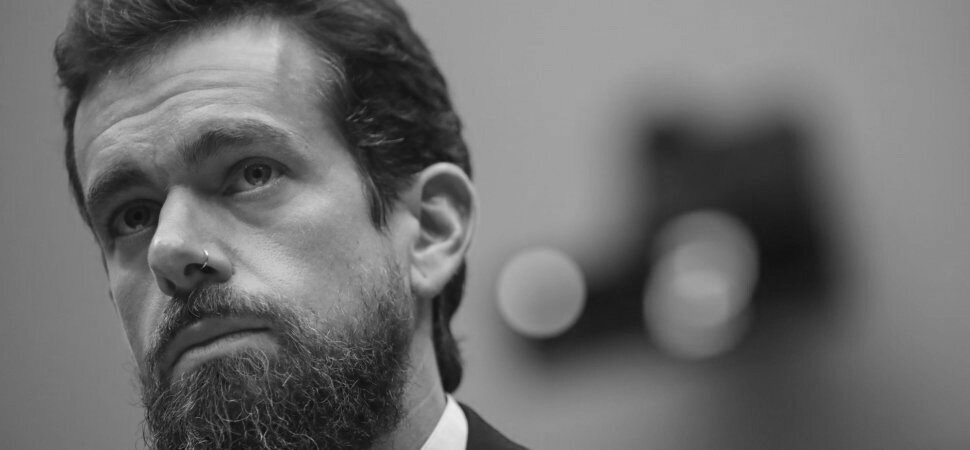
Jack Dorsey
Jack Dorsey, the social media platform boss Twitter, has recently announced via Twitter that he will be visiting Africa. In his announcement, he mentioned that he will be visiting various countries that include South Africa, Ghana, Ethiopia and Nigeria. According to the tweet his visit is scheduled for November 2019.
The globe-trotting billionaire co-founder of one of the most powerful social media platform has been touring the world visiting various offices of the Twitter corporation. He recently visited Australia, New Zealand and Canada.
In his tweet, he also mentioned that during his visit he will be meeting with local entrepreneurs. Dorsey is also a co-founder and CEO of a financial technology startup, Square. The fin-tech company provides payments hardware and software to small businesses. Currently, Square does not operate on the African continent. His visit to the continent could be related to introducing Square to local entrepreneurs.
Dorsey was born in St. Louis, Missouri, on November 19, 1976, Jack Dorsey became involved in web development as a college student, founding the Twitter social networking site in 2006. Growing up in St. Louis, Dorsey became interested in computers and communications at an early age and began programming while still a student at Bishop DuBourg High School. He was fascinated by the technological challenge of coordinating taxi drivers, delivery vans and other fleets of vehicles that needed to remain in constant, real-time communication with one another. When he was 15, Dorsey wrote dispatch software that is still used by some taxicab companies today.
After a brief period at the Missouri University of Science and Technology, Dorsey transferred to New York University. He, however, dropped out of college before receiving his degree. He thereafter moved to Oakland, California, and in 2000 started a company offering his dispatch software through the Web. Shortly after starting his company, Dorsey came up with the idea for a site that would combine the broad reach of dispatch software with the ease of instant messaging. Dorsey approached a now-defunct Silicon Valley company called Odeo to pitch the concept. Dorsey, Biz Stone and Odeo co-founder Evan Williams started a new company, called Obvious, which later evolved into Twitter. Within two weeks, Dorsey had built a simple site where users could instantly post short messages of 140 characters or less, known in Twitter parlance as "tweets."
On March 21, 2006, Jack Dorsey posted the world's first tweet: "just setting up my twttr." Dorsey was named the company's chief executive officer.
Twitter was initially derided by some as a tool for the shallow and self-centred to broadcast the minutiae of their lives to the universe.
Twitter vaulted to international prominence after the June 2009 presidential elections in Iran, when thousands of opposition supporters took to the streets to protest the claimed victory of incumbent Mahmoud Ahmadinejad.
In 2010, Twitter had more than 105 million users who together tweeted some 55 million times a day. Dorsey, however, had set his sights on other projects. He became an investor in the social networking company Foursquare and launched a new venture, Square, which allows people to receive credit card payments through a tiny device plugged into their mobile phone or computer.
If the Twitter reaction to the Africa visit announcement is anything to go by, the Twitter boss will be warmly welcomed in the African continent.
HUMAN 2.0: When Humans merge with Machines
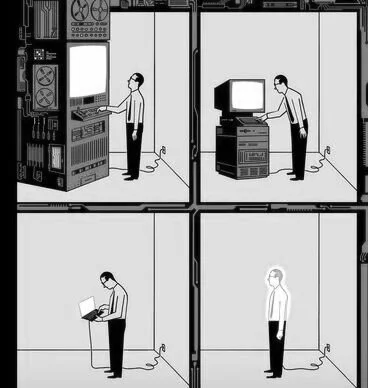
New Yorker magazine cover, September 2019
If you wanted to know the past and future of computing, all you need to do is to take a look at September 2019 cover of the New Yorker magazine.
A cover designed by Christoph Niemann depicts a computing evolution from big mainframe computers and other computing developments that followed such as smaller computers to computer-powered human beings. Yes, humans, which can also be referred to as Human 2.0, the merging of human beings (biological intelligence) with technology (machine intelligence).
Neurotechnology is not new, it was born in the 1970s when Jaques Vidal proposed that electroencephalography (EEG), which tracks and records brain-wave patterns via sensors placed on the scalp (electrodes), could be used to create systems that allow people to control external devices directly with their mind. The idea was to use computer algorithms to transform the recorded EEG signals into commands. Since then, interest in the idea has been growing rapidly as seen in recent announcements by a startup led by Elon Musk, Neuralink and research financed by Facebook at the University of California, San Francisco.
Neuralink is developing an ' interface', essentially a network of tiny electrodes linked to your brain that the company envisions will allow us to communicate wirelessly with the world. It would enable us to share our thoughts, fears, hopes and anxieties without written or spoken the language. Essentially, the A whole-brain interface would give your brain the ability to communicate wirelessly with the cloud, with computers, and with the brains of anyone who has a similar interface in their head.
The technology developed by Neuralink could initially be used to study brain mechanisms and treat disorders such as epilepsy or major depression. Together with electrodes for “reading” the brain activity, it could also implant electrodes for stimulating the brain – making it possible to detect and halt epileptic seizures.
The Elon Musk-led startup is not alone in merging the brain with technology. Facebook at the University of California is financing research that is creating a device, brain-machine interface, that can read your mind literally. This it does by picking up thoughts directly from your neurons and translate them into words. The short-term goal is to help patients with paralysis, by decoding their brain signals and allowing them to communicate their thoughts without ever having to move a muscle. In a first for the field, researchers at the institution say, they’ve built an algorithm that’s able to decode words from brain activity and translate it into text on a computer screen in real-time. The human participants in their study — three volunteers with epilepsy — already had electrodes surgically implanted on the surface of their brains as part of the preparation for neurosurgery to treat their seizures. They listened to straightforward questions (like “How is your room currently?”) and spoke their answers out loud. The algorithm, just by reading their brain activity, decoded the answers with accuracy rates as high as 61 per cent.
All of these developments are futuristic in nature but are a preview of what’s coming in the future. Amazon, however, is developing tools that can be regarded as the beginning of this trend at least by familiarising society to gadgets that connect with our bodies.
Recent announcements by Amazon such as the Amazon Echo set of devices spectacles, ear devices and a ring are to a certain extent a process that will lead to merging human intelligence and machine intelligence. Although Amazon Echo has nothing to do with neurotechnology they are devices that can (if successful) convince human beings to easily accept invasive objects into the human body.
Although these developments are an important step in the evolution of computing, they also raise critical ethical issues. A lot can go wrong if these tools malfunction within our bodies as its often the case with technology. Currently professional and companies that develop these tools are not subjected to the same ethical standards that medical professionals undergo. It is therefore high time that an international ethics body be established to oversee and govern technologies that will have a significant impact on peoples lives. If this matter was hidden from the public eye, the September 2019 New Yorker magazine cover by Niemann should serve as a wake-up call of where technology is taking us and inspire action now to ensure that we don’t suffer in the name of advancement.
DEMAND FOR TECH JOBS OUTSTRIPS SUPPLY - #ICTSkillsReport2019
“Some jobs will disappear, others will grow and jobs that don’t even exist today will become commonplace” this is the conclusion of the tenth edition of the South African ICT Skills Survey conducted by the Joburg Centre for Software Engineering (JCSE) at Wits University.
The research is based on an online survey conducted among “a few hundred” employers and employees in cross-sector South African organisations, of which 40% are in the ICT field. 52% of enterprises responding to the survey were South African private enterprises and 19% were foreign-owned private enterprises.
The report suggests that in order to survive the future workforce will need to align its skillset to keep pace. Contrary to popular belief that technology destroys jobs the report indicates that there are currently vacancies that are hard to fill. According to the 10th ICT Skills survey based on data submitted by the BankSeta the following are vacancies that are hard to fill in the banking sector:
Software developer,
ICT Security specialist,
Database designer and administrator,
ICT Systems analyst,
Systems administrator,
Programmer analyst,
ICT Communications assistant
All of these skills are in big demand and are listed as scarce skills. This is also confirmed by remarks by the Capitec CEO, Gerrie Fourie, who was qouted saying recently “If you give me 100 skilled data engineers, machine learning guys and IT professionals I would take them tomorrow.”
Data Analytics has been identified as a major future development area for the banking sector as companies have large quantities of consumer data where the ability to identify trends and develop innovative solutions from that data is required.
The report however paints a bleak picture about the availability of such skills since there’s a dearth of Statisticians in South Africa according to several reports.
The report also raises concerns about prolonged failure to improve the science, technology, engineering and mathematics (STEM) output. The 10th edition of the report highlights the fact that the failure to improve STEM will have a serious negative impact on South Africa’s ability to counter the growing risk of cybercrime attacks (estimated as costing R1 billion each year), as well as capacity to maintain a competitive and innovative ICT industry.
The report places priority on the need for investment in teaching and training.This is more critical now in South Africa as the report concludes by stating that the demand for relevant skills will continue to outstrip supply which should be a matter of concern for academia, corporations and society in addressing the unemployment challenge.
Adrian Schoefied who is one of the authors of the report, pointed out that to address the ICT skills challenge, academic institutions should not be the only ones carrying the burden. He pointed out that to address the skills challenge society will have to work together. According to Schoefiled, corporates and other members of society would have to form part of a solution to the skills challenge.
This is also critical as South Africa is gearing for the 4th Industrial Revolution. Authors of the report point out that the scarcity of skills in fields such as artificial intelligence, Internet of things, blockchain, automation, data science will impact SAs ability to compete in the future.
The New (upcoming) World Built by Facebook

Mark Zuckerberg presenting Facebook Horizon virtual world
When Facebook acquired Oculus, a virtual reality headset maker, for $2 billion the MIT Technology Review highlighted that Facebook acquired virtual reality startup because it believed that virtual reality could be the next big thing after mobile. Fast forward 3 years later, some business publications pointed out that Oculus was a headache for Facebook and that it was not paying off. Yesterday, Facebook finally revealed why this technology is worthwhile for the social network giant.
The social network giant revealed a plan to build a virtual world, called Facebook Horizon, that will be accessible via the Oculus Rift headsets. As interest in Facebook is waning, Facebook Horizon could become the saviour of the social network giant. Facebook Horizon is a virtual reality sandbox universe where you can build your own environments and games, play and socialize with friends or just explore the user-generated landscapes. Facebook Horizon will enable virtual presence for human beings to do exactly what they do in real life in the virtual world. A human being will have a version of himself/herself or an avatar in a virtual world. Facebook Horizon is planned to be launched in 2020 initially in closed beta (meaning only for a select few users). Through Facebook Horizon, Facebook will truly become a hardware and social network company which is rare in the social network business eco-system. It will mean that to participate in the Facebook virtual world you will need a headset designed by Facebook.
In this virtual world people will choose how they look and what they wear from an expansive and inclusive set of avatar tools which will be created by Facebook. This is huge for Facebook bottomline. It will be a world with virtual billboards for brands, Facebook-run shops for playing and living in the virtual world, third-party malls full of branded products. The value of Facebook Horizon cannot be underestimated. It will enable Facebook to have another revenue source beyond just advertising.
Facebook has invited early adopters to signup to form part of early citizens of its virtual world. Before signing up, interested ones are informed about rules of becoming citizens on this virtual world. Through Facebook Horizon, Facebook is reinventing social networks. In the past Facebook has committed acts that impacts on its trust. As future citizens of this new virtual world decide to become citizens it will be important to make informed decisions before getting into a situation that cannot be corrected.
If Mark Zuckerberg ever harbored dreams of world dominion, Facebook Horizon is a perfect platform to fulfill those dreams. If users were fooled in the past to join the giant social network, this time around there’s an opportunity to reflect.
The Facebook co-founder Chris Hughes wrote an essay for The New York Times in which he suggested that Mark Zuckerberg is a “good, kind person” but one whose “power is unprecedented” and whose “influence is staggering, far beyond that of anyone else in the private sector or in government.” The Facebook Horizon will take that power to levels we’ve never seen before. As Facebook Horizon is styled after Second Life platform which has been around for the last 13 years, it will be important to learn from the mistakes committed with Second Life platform which at some point had as many as 900,000 users on its own virtual world. The platform grew to have its own in world economy which led to a series of legal and regulatory challenges.
The Facebook virtual world will probably grow more than the Second Life platform,if it does, we should brace ourselves for new challenges and opportunities that will come with the new virtual world.
Key Highlights from Huawei Connect 2019
A Huawei logo on display at MWC Shanghai in June 2019
The last keynote address at Huawei Connect 2019 gave away a key strategy by Huawei in its quest to lead the technology revolution. The keynote address was delivered by the leader of the Linux Foundation, Jim Zemlin. The Linux Foundation is dedicated to building sustainable ecosystems around open source projects to accelerate technology development and industry adoption. Founded in 2000, The Linux Foundation provides unparalleled support for open source communities through financial and intellectual resources, infrastructure, services, events, and training.
Working together, The Linux Foundation and its projects form the most ambitious and successful investment in the creation of shared technology. According to Zemlin, open-source powers every trend in computing. Zemlin during his address emphasised that some of the best innovations in the technology industry are made possible by Open Source. He also indicated that the open-source community is grateful that Huawei supports Open Source. The presence of Linux Foundation at the Huawei Connect 2019 event marked a significant move by Huawei towards Open Source.
As part of this move, Huawei will have access to global technology skills beyond its full-time workforce. Huawei also launched a development kit, Huawei KunPeng Developer kit. During the Huawei Connect gathering, Huawei also announced an R22 billion fund to support open source developers. This move by Huawei is probably the best move by the Chinese tech giant in response to its current challenges with the US government.
Open source movement will probably be a key resource in speeding up the development and implementation of the Harmony operating system which may replace Android on all Huawei devices. The Open source movement will ensure that Huawei device users are not left behind when they use Huawei devices which may be powered by Harmony operating system in the future.
“Open source is developed faster than any technology in the world,” said Zemlin who expressed Linux Foundation support for Huawei.
The Open Strategy has full blessings of the Huawei leadership. The first keynote address at Huawei Connect which was delivered by the Deputy Chairman, Ken Hu, highlighted that the process of building an open ecosystem is part and parcel of the Huawei strategy. Hu, indicated that in the next five years, Huawei will invest billions in its developer program. The aim is to expand the program to support five million developers and enable Huawei's worldwide partners to develop the next generation of intelligent applications and solutions.
CHINA is open for business with African tech startups
Tech startups in South Africa often complain that the market in the country is not big enough to scale their businesses. The Changemakers program for China is trying to solve this problem. The program, Changemakers for China, aims to bring global talent to China by developing relationships with startups. Startups selected for this program benefit with access to Chinese industry leaders as well as institutional and government delegates who have pre-vetted interest in their businesses. Additionally, startups may also get to have 1-on-1 meetings with companies they want to do business with. These benefits are great for tech startups in Africa in expanding their market in China.
The goal for this program is to create a cross-border community for Chinese companies and organizations to benefit from innovations happening abroad including Africa. Benefits include free office space in China for an extended period in order to begin building a local presence.
Startups with a focus on the following disciplines are encouraged to apply:
Robotics,
Artificial intelligence
Autonomous driving
Biotech and
Aerospace engineering.
Tech startups in the growth stage can submit their applications online before 12th October 2019. Further information will be available here.
China’s information and communication technology (ICT) market are among the most dynamic sectors. By 2021, the market is projected to reach $8.1 trillion, representing 55% of China’s GDP, according to information technology (IT) consulting firm IDC. China’s ICT imports in 2017 totalled $528 billion, while its exports reached $781 billion.
The adoption of technology with fin-tech leading the way positions China as one of the few countries where technology startups can succeed. According to a McKinsey report, penetration of mobile payments among China’s Internet users grew from just 25 percent in 2013 to 68 percent in 2016. In 2016, the value of mobile payments related to individuals’ consumption was $790 billion, 11 times that of the United States.
African technology startups can jumpstart their growth by locating themselves in China. China has around 700 million internet users and 282 million digital natives (internet users less than 25 years old) eager to adopt new technology. The massive scale of the Chinese market and a supportive regulatory and supervisory environment in the early years of digitalization made China a global leader in frontier industries such as e-commerce and fin-tech. Digitalization will continue to reshape the Chinese economy by improving efficiency, softening—but not reversing—slowing growth as the economy matures. China, already a global force in digital technologies, is set to experience huge shifts in revenue and profits as businesses digitize, boosting the economy’s international competitiveness. China has become a force to be reckoned with in digital technologies at home and around the world. As a major worldwide investor in digital technologies and one of the world’s leading adopters of the technologies, it is already shaping the global digital landscape and supporting and inspiring entrepreneurship far beyond its own borders.
WHY BILLIONS FOR MAKATE?

The Inventor
Nkosana Makate - The Inventor of the “Please Call Me service”
According to Kenneth Makate who invented the Please Call Me service, the invention is worth R10 billion. This value has been questioned by some who claim it’s too much for the invention. Some have however suggested that Makate deserves to be compensated for the invention.
The Please Call Me debate is forcing South Africans to begin a discussion about the value of information products and how to compensate innovators at work. There’s no question about the need to compensate Makate for his invention as the Constitutional Court declared on this matter. The value of compensation is the bone of contention and the Please Call Me product worth is what needs to be determined.
The dominating narrative is that Makate simply presented an idea without implementing and therefore he does not deserve much in terms of compensation. This reasoning is flawed since the idea was based on an understanding of the market conditions and the value of the USSD technology. There are a couple of reasons why Makate deserves the billions for the invention. The following are just some of the reasons:
Technology Commercialisation Strategy: Freemium Model
Technology: USSD (Value Added Service)
Target Market (Africa)
TECHNOLOGY COMMERCIALISATION STRATEGY
One of the main challenges in implementing consumer technology services in Africa is the affordability of communication. In comparison with other parts of the world, the African consumer market does not spend much on technology communication services. This was even more complex in the early 2000s when the Please Call Me service was invented. The affordability of communication was the driver for the creation of this service. At the time this was a major challenge for consumers and companies like Vodacom.
It can, therefore, be argued that the concept was not just a technology. It also introduced a technology commercialisation strategy that did not require the audience to pay, the freemium model. This alone was a great achievement by Makate who understood this based on his observations as an accountant at the time within Vodacom. What Makate achieved for Vodacom is equivalent to what Google achieved with enabling the public to search for anything online for free. When Google was created this approach was considered revolutionary.
TECHNOLOGY: USSD (Value Added Service)
The Please Call Me Service was not just a useless idea. It was an idea that took Unstructured Supplementary Service Data to another level (USSD) to another level. What Makate introduced was a Value Added Service on top of the USSD platform. His addition was key. It was also different from other inventions from MTN and Orange Personal Communication Services. The key difference is related to the target market and business objective.
TARGET MARKET
Makates idea was that the service should be focused on a particular market, namely, that of people with prepaid cellular phones who were out of airtime in the African continent. This target market was key, especially when one considers that the service was first introduced in the African continent where most users at the time were always out of airtime.
These factors should be considered before anyone declares that the Please Call Me service is not worth much. It is important that decision-makers who make decisions about the value of information products familiarise themselves with the true value of information assets and ideas.
Facebook acquired WhatsApp, a service which enabled free communication via mobile phones for US$19.3 billion. How valuers of WhatsApp determined such value for WhatsApp should be understood. The monetary value derived by Vodacom based on the Please Call Me service goes beyond advertising revenue. Makate enabled Vodacom to access a tough African market with a groundbreaking tech commercialisation strategy. The true value of the Please Call Me product should be determined. This process should not only take into account the advertising revenue generated from the service. This process should measure Please Call Service as a product. It should consider the Please Call Me service audience in the same way that the audience on Facebook is measured. Each person who used the service has to have a monetary value attached to them. Such clients did not just use the Please Call Me service. Some of them switched to Vodacom to use the service and some of them evolved to become loyal subscribers. All of these factors should be considered. The Please Call Me concept is worth a patent. Its inventor should be rewarded accordingly.